
06 August 2026
Heatwaves and severe drought force shutdowns at Polish coal plants
Another EU country’s energy system struggles under fossil fuel dependence this summer
6 August, 2026, Warsaw – On Tuesday, 4 August, Polish utility Enea was forced to reduce generation at the Kozienice and Połaniec coal-fired power plants after critically low water levels in the Vistula River limited cooling water supplies, removing almost two percent (1.3 GW) of Poland’s current capacity from its power system [1] and disruptions continue. This comes as heatwaves and drought push water sources in Europe to record low levels, exposing the growing vulnerability of water-intensive fossil fuel plants to the climate crisis.
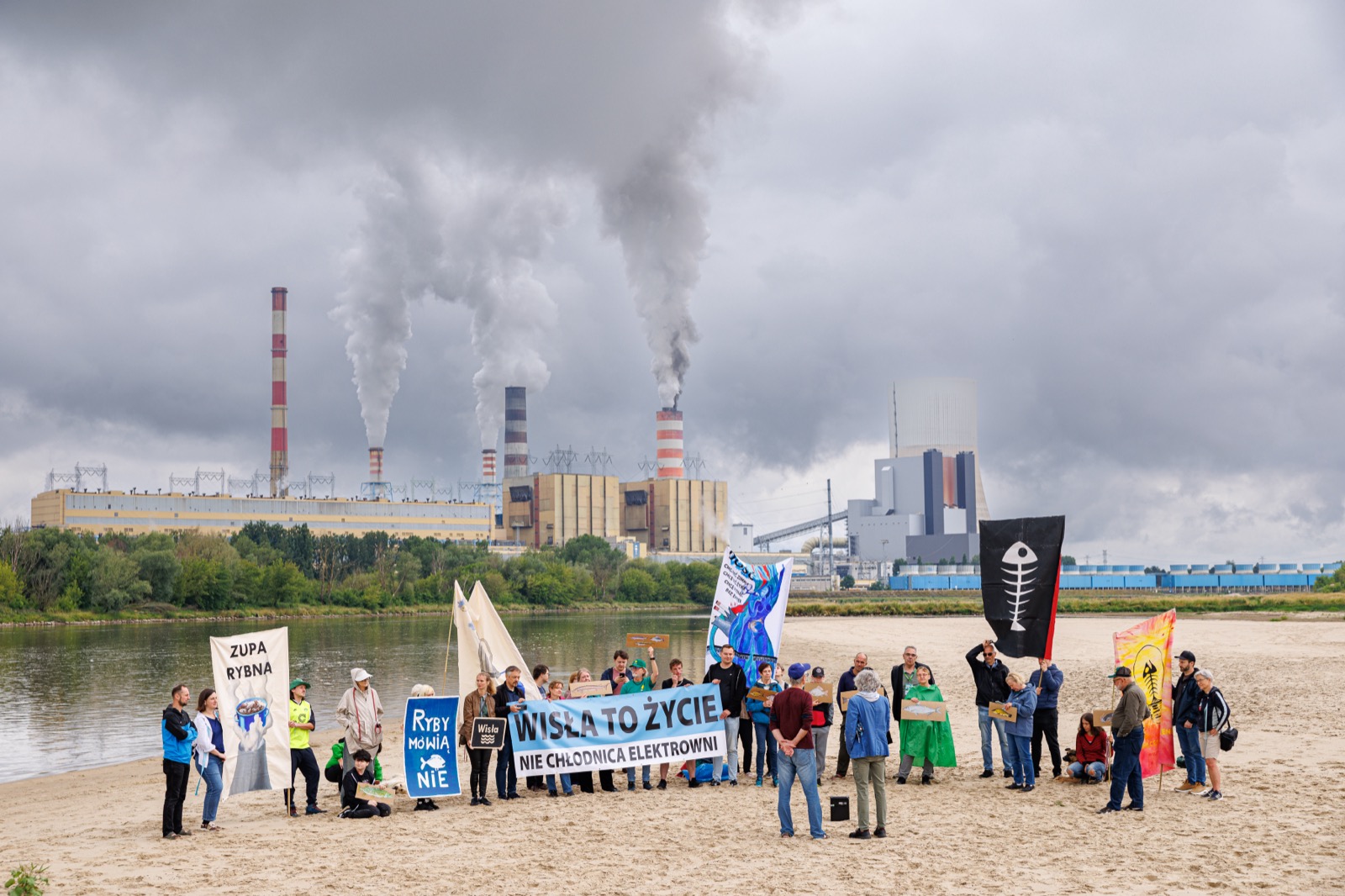
Cezary Kowalski Fotografia
The Kozienice power plant, located on the Vistula River, is Poland’s largest hard coal-fired power station, with a capacity of 4 GW. Its environmental impacts on the Vistula have been documented for years. River flow near the Kozienice Power Plant fell to just 135 m³/s on 5 August, reflecting severe drought conditions. The plant’s cooling system withdraws approximately 80–100 m³/s of water from the river—more than half of the remaining flow under such conditions [2]. Research has found that the plant’s cooling system kills 102 million fish larvae from 23 fish species every year, including six protected species [3].
Only a few months ago, the Regional Director for Environmental Protection (RDOŚ) in Warsaw ordered Enea to propose remediation measures to address environmental damage to the Vistula River and its protected fish species. This is the first order of its kind issued in Poland and among the first cases in the European Union to reach this stage under the Environmental Liability Directive [4]. The deadline has now passed and there is no indication that the company has presented a remediation plan.
Despite the increasing pressure on the river and environment, Enea is also proceeding with plans to build a new 1.3 GW gas-fired power plant at the Kozienice site [5]. The new facility is intended to operate in parallel with the existing coal units, potentially increasing pressure on the Vistula River ecosystem through continued high cooling water demand. Construction began in 2026, with the gas units expected to enter operation in 2029. The existing coal-fired units are currently scheduled to be decommissioned by 2032.
Paweł Pomian, Vice-President of EKO-UNIA, a Polish environmental organisation and a party to the environmental proceedings:
“This is the paradox of the climate crisis: power plants driving climate change are increasingly becoming its victims. Kozienice isn’t unique. There are many plants with similar cooling systems across Poland and there will be more if the government continues to expand fossil gas. In the 21st century, energy security should not compete with people and nature for every drop of water. Today’s drought should be a wake-up call not only for Poland, but for the whole of Europe. The faster we develop wind and solar power — technologies that require the least water to generate electricity — the better we can protect both energy security and our rivers.”
Kasia Szeniawska, Campaigner at Beyond Fossil Fuels:
“Coal plants are paying the price for the problems they created. As heatwaves and droughts become more severe, it has exposed the weaknesses of fossil fuel based energy systems. While most EU countries cut down their coal use, Poland is not only failing to plan a timely coal phase-out, it’s also proposing new gas plants that will only aggravate environmental issues. Instead, Poland should seize this moment to invest in renewables and clean, flexible energy solutions that strengthen energy security and protect communities from unpredictable energy supply and bills, and the worsening effects of the climate crisis.”
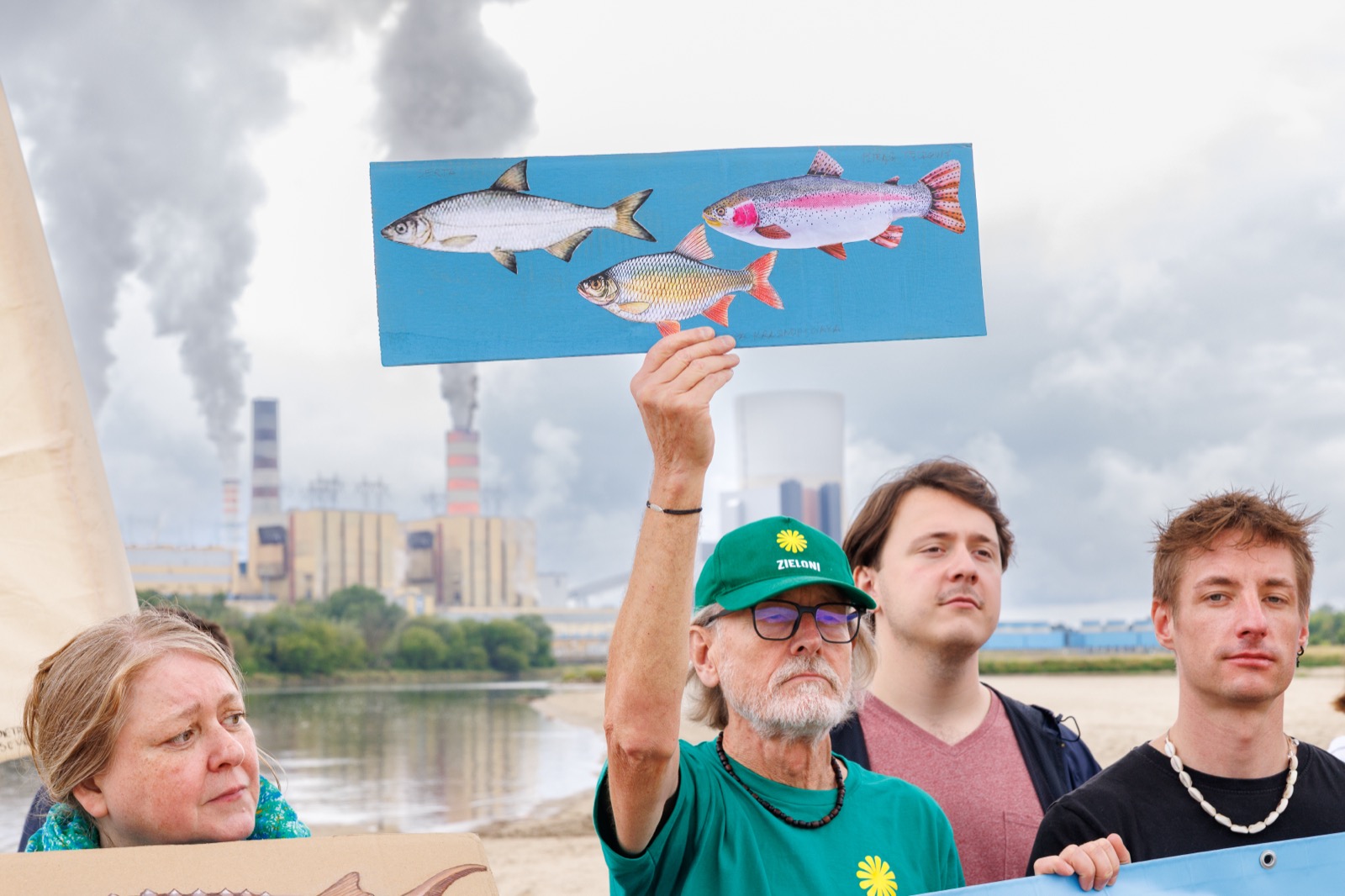
Cezary Kowalski Fotografia
ENDS
Notes:
- https://www.pap.pl/aktualnosci/elektrownie-kozienice-i-polaniec-ograniczyly-prace-z-powodu-niskiego-stanu-wisly
- https://hydro.imgw.pl/#/station/hydro/151210120?h=73
- https://www.kmae-journal.org/articles/kmae/full_html/2023/01/kmae230056/kmae230056.html
- https://www.onet.pl/informacje/odpowiedzialny-inwestor/ryby-wsysane-przez-elektrownie-sprawa-ciagnie-sie-od-lat/0023qjm,0666d3f1
- Kozienice gas plant profile: https://beyondfossilfuels.org/gas/
- Protest at the Kozienice coal plant: https://eko-unia.org.pl/kozienice-zabieraja-nam-polowe-wisly-miliardy-organizmow-gotuja-sie-zywcem/
- Photos of the recent protest organised by Eko Unia. Please credit: Cezary Kowalski Fotografia
Contacts:
Kasia Szeniawska, Campaigner, Beyond Fossil Fuels, kasia.szeniawska@bff.earth
Julia Pazos Communications Manager, Beyond Fossil Fuels, julia.pazos@bff.earth, +13109949692
Paweł Pomian, Vice-president, Media Coordinator, EKO-UNIA Ecological Association, ppomian@eko.org.pl,
About:
Beyond Fossil Fuels is a civil society network committed to ensuring a just and rapid transition to a fossil-free, renewables-based future. Building upon the Europe Beyond Coal campaign, its goal is for Europe to be coal-free by 2030 and phase out fossil gas from the power sector by 2035. A clean and flexible energy system will deliver lasting benefits for people, the climate and the broader economy. Beyond Fossil Fuels is a non-profit organisation with an office in Berlin, with staff spread across Europe. www.beyondfossilfuels.org